Showing posts with label health. Show all posts

Monday, September 12, 2011

Organic...the basics you need to know.


In Lebanon, we tend to confuse Organic production with "Home made", "Natural" or "Private gardening". We sometimes even believe that "organic" is restricted to "healthy"...healthy for your body and diet. But these prejudice are incorrect...Organic is actually extremely linked to Environment...so let us elaborate a little more in order to brighten the big picture.

1-How to define "Organic Foods"?


Organic foods are produced using methods that do not involve modern synthetic inputs such as synthetic pesticides and chemical fertilizers, do not contain genetically modified organisms, and are not processed using irradiation, industrial solvents, or chemical food additives.
For the vast majority of human history, agriculture can be described as "organic"; only during the 20th century was a large supply of new synthetic chemicals introduced to the food supply. The organic farming movement arose in the 1940s in response to the industrialization of agriculture known as the Green Revolution.


Last but not least: [On the contrary to what you may think], the weight of the available scientific evidence has not shown a significant difference between organic and more conventionally grown food in terms of safety, nutritional value, or taste. [This must be double checked in reference to the Lebanese reality.]
source: wikipedia, more here.

2-How could we distinguish organic products from conventional ones (in local Lebanese context)?


No farmer can claim that his / her crops are organic just because they believe they are. Soils must be tested and the whole farming process must be monitored and regulated in order to accredit such sayings. There are independant certifying bodies who operate on this level in order to grant producers an official Organic Certification for their production, and hence, an official organic label for their products.

In Lebanon, two bodies are approved to certify and grant the organic label: IMC (Instituto Mediterraneo di Certificazione) and LibanCert.

During their assessment, they inspect the facilities, the soil, the water used for irrigation, the packing material, the cleaning products, and they do random sampling of final products to be sent for laboratory tests.

While buying local products at the store, look for the below logos for certification:

3-Organic farming and Environment...any impact?

According to a French study done by the Agence BIO (2006 report), organic farming has demonstrated positive impacts on the soil's structure and fertility; some of the study findings are listed below:
  • Absence of residues of synthetic chemical pesticides
  • Intense biological soil activity
  • Higher level of organic sustances in the soil
  • Limited nitrate pollution
  • Crop diversity, landscape diversity
  • Biodiversity of natural species are witnessed in the surroundings of organic farms
  • Conservation of the genetic diversity of cultivated plants
The soil is a living environment, housing a variety of bacteria, micro-fungi, insects, earthworms etc. It is a complex and multi-functional nonrenewable resource! We must preserve it from often irreversible damage given its major role in the regulation of natural balances.

75% of French consumers accompany their organic purchase with an ethical incentive. They believe that choosing organic is looking beyond the present and making a sustainable choice for generations to come.


4-Where can you purchase fresh and processed local organic products?

I've researched some local outlets and specialized stores...listed below in random order:
Organic Bakery Chouf area Tel: 05340371; available in Beirut through network stores

Beit el Soha Facing Hotel Dieu hospital, Achrafieh; Tel: 01398366

A New Earth Achrafieh (Zahrat al Ihsan street); Tel: 01219920

Live Organic New Naccache, main road; Tel: 04444886

Healthy Basket Store in Hamra & Home Delivery; Tel: 01747831 and 03794438

Naturalia located in Baabda, Tel: 05456566

It is a narrow list and does not include all places, in addition to small selective outlets, all supermarkets usually do have imported and local organic items.

Wednesday, July 27, 2011

Pomegranate virtues...the scientific truth

From Healthcentral.com:

There is a lot of buzz lately about the pomegranate exotic fruit. How much is supported by scientific research?

Pomegranates grow wild from Iran to northern India, but they are cultivated throughout India, the Middle East, southern Europe and California.

Here’s what some of the researchers’ reports say about the pomegranate fruit:

1- Rich in antioxidants that can keep bad LDL cholesterol from oxidizing
2-Pomegranate juice, like aspirin, can help keep blood platelets from clumping together to form unwanted clots
3-Eight ounces of pomegranate juice daily for three months improves the amount of oxygen getting to the heart muscle of patients with coronary heart disease
4- Possibility that pomegranate compounds might prevent prostate cancer or slow its growth
5- Pomegranate juice might help reduce the risk of breast cancer
6- Tissue cultures of human cartilage cells respond to pomegranate extract. Inflammation is reduced and the enzymes that break down cartilage become less active.

This is still far from a prescription for aching joints, but most experts agree that a little pomegranate won’t hurt and might help!

Scientific research sources:
American Journal of Clinical Nutrition, May 2000
American Journal of the College of Cardiology, Sept. 2005
Journal of Nutrition, Sept. 2005

Tuesday, July 12, 2011

So who is Jim? And what is Fatteh?


Just like us, Jim is a gourmet who simply loves delicious food!


His eagerness to share with the world the secrets and richness of the Lebanese cuisine has driven him, along with his partner, to set up an online website dedicated to topnotch recipes that everyone must try out! Ladies and gentlmen, recettelibanaison.com is a mixture of food, of photography, of mezze, platters, breads and all types of desserts...While you're on the homepage, make sure to check out Les Recettes Minceur...I guess we all need some salad tips and ideas for summer time!


As for Fatteh...the origin of this dish is said to be Syrian...but it is commonly prepared in Lebanon and could have so many variations: with or without meat, with yoghurt or sometimes Tahini, could also include eggplants, some paprika and other types of spices.


Recettelibanaise brings you Fatteh as described below:


Ingredients (serves 4):
- 200 g cooked chickpeas
- 200 g of ground beef coarsely chopped
- 4 small pots of yogurt
- 2 cloves of garlic, crushed with salt
- 1 / 2 teaspoon of salt
- 1 / 2 teaspoon of dried mint
- 1 / 4 teaspoon of black pepper
- 1 / 4 teaspoon of pepper
- 2 tablespoons pine seeds
- 2 tablespoons of vegetable oil (olive oil could work as well)
- 1 loaf of Lebanese bread

Preparation:
-Cut the bread into small triangles and grill them in the oven.
-In a bowl combine garlic, salt, mint and yogurt.
-In a saucepan, brown the pine seeds until lightly browned then remove.
-Add ground meat and fry until it changes color. Season with salt and spices and then add the pine seeds.

Serving:

-Place the pieces of toast in the bottom of a dish.
-Add the chickpeas over the bread.
-Pour the yogurt.
-Top with minced meat and pine nuts.
-Garnish with a mint leaf!


Et voila...your perfect summer entrée! Bon Appétit!

And as my colleague would perfectly describe it"you will eat and cry" (from joy of course...a la libanaise)...!!

Sunday, June 26, 2011

This summer...careful with the sun and keep your skin hydrated!


If you think that pollution is the number one cause to harm your skin…
think twice.

Researches show that sun is actually the first cause behind skin cancer, wrinkles, eczema and other types of irritations…

According to the WebMd advice:
“You might like the look of tanned skin, but the sun takes a heavy toll on your health and your appearance. Sunlight consists of UVA rays, which can lead to premature aging and skin cancer, and UVB rays, which are the main cause of sunburn. A broad-spectrum sunscreen will protect you against both types. Make sure to coat the skin generously, and don't forget to use a protective lip balm.”

Our recommendation for you this summer, is to give yourself the easy-crucial-responsible treatment! Hmmm, so what does it consist of?

Well…first of all start your day with:


  • A gentle and efficient facial cleanser, which would also exfoliate your skin

  • Then apply a matt and odorless sunscreen on your face and neck! (Yes you will look much younger as the years go by…it’s the dermatologists best kept secret!).
Second clause: Remember to moisturize your skin everyday! Consider replacing your commercial shower gel with a natural soap, such as olive oil soap.
For that, we do have exactly what you need….

Our olive oil and bay leaf (5%) soap is made from 100% natural ingredients, according to the traditional Aleppo recipe. It is a natural antiseptic soap with vegetable fat and no chemical additives, ideal for sensitive skins.
Beauty experts highly recommend olive oil soap during summer and all year long for its moisturizing properties, it retains water and keeps the skin hydrated.
Exfoliating and moisturizing is definitely the recipe for smooth and soft body care!

Wednesday, July 7, 2010

Mulberries


It is the Mulberry Season! A very brief season, begins around the end of June until mid July, with lots of mulberry trees in Lebanon; these fruits are at their best when you harvest them and eat them on the spot.


The benefits of mulberries are numerous...

"Mulberry is one of the nutrition treasures of alternative health medicine. Mulberry contains fiber, calcium, phosphorus, potassium, magnesium, carbohydrates, iron and proteins essential to one's good health. The fruit is found mainly in the subtropical regions of Asia, Africa and the Americas and can be black, red, pink or white in color.

Mulberry juice is believed to be a good source of treating anemia and poor blood circulation. The fruit is also a good source of nutrients that lower high blood pressure, reducing the risk of blood clots and strokes."
More on health benefits here.

To give you some ideas, we will be posting recipes and serving suggestions about what you can do with the Fruit and its Syrup!

We have mulberries, so let's enjoy them ; )

Thursday, June 10, 2010

It's the apricot season!


Rediscover the apricot taste with the Terroirs du Liban Apricot Jam...Try it with croissants, cookies or white cheese!


About Apricots, here and there on the internet...read on:

The Chinese associate the apricot with education and medicine.

The fact that apricot season is very short has given rise to the very common Egyptian Arabic expression "filmishmish" ("in apricot [season]"), generally uttered as a riposte to an unlikely prediction, or as a rash promise to fulfill a request.

Dreaming of apricots, in English folklore, is said to be good luck!

The Turkish idiom "bundan iyisi Şam'da kayısı" (literally, the only thing better than this is an apricot in Damascus) means "it doesn't get any better than this" and used when something is the very best it can be; like a delicious apricot from Damascus.

...I'm falling for this fruit, oh yes.

Thursday, April 1, 2010

White coffee... what else?

Spring is here and Fair Trade Lebanon is happy to introduce you its Orange Blossom Water (MaZaher) made from the traditional distillation of orange blossoms, with an alembic still.


Orange Blossom Water is ideal for pastries, confectioneries, pastes and creams. Use it for Lebanese white coffee! very soothing!


If you are in Europe, buy it here.
If you are in Lebanon, head to Saint Rita's House in Achrafieh, Sassine Street (01-320 300).
If you are in Lebanon and would like to order other products as well, we can deliver! Call our office : 05-952153.

Enjoy!

Thursday, March 25, 2010

Positive vibes in Lebanon

If you have stopped believing in Lebanon… read on..

Every now and then, I discover new initiatives and projects being done in order to raise awareness about important issues in our society.
Problems here are too many to be counted or be solved immediately but sometimes it just takes a few positive vibes to give you hope again.

Producing in Lebanon is a major challenge, you cannot recognize how hard it is until you see it with your own eyes and hear all the results of research studies done on the subject. Selling quality products and teaching consumers about the necessity of favoring seasonal, authentic and local produces is just another story.

This why I consider the people and organizations listed below as true warriors.

SLOW FOOD BEIRUT: protecting our invaluable food heritage


Slow Food Beirut is a Lebanese convivium and a Non Governmental Organization. It seeks to promote a good clean and fair food system.
Slow Food Beirut believes the enjoyment of excellent food and drink should be combined with efforts to save the countless traditional grains, vegetables, fruits, animal breeds and food products that are disappearing due to the prevalence of convenience food and industrial agribusiness.
Buy the book From 'Akkar to 'Amel : Lebanon's Slow Food trail


SOUK EL ARD or Earth Markets or Terra Madre….


The Earth Markets in Lebanon are part of an international network of farmers' markets, a project that started in Italy. They are direct selling markets, where every vendor is a producer who sells local and seasonal food, respecting the Slow Food principles of Good, Clean and Fair.


SOUK EL TAYEB


Souk el Tayeb is Lebanon’s first farmers market, of fresh, seasonal, traditional, natural and organic food products. A weekly market in Beirut and other Lebanese regions, gathering small farmers and producers; true “earth and land lovers”, sharing a dream and concern of respect and responsibility towards earth and men.
Every Saturday in Saifi Village parking (from 9 am till 2 pm), every Wednesday in ABC Achrafieh L3 Parking (from 4 pm till 8 pm).


...So if you have stopped believing in Lebanon….some people are still trying to and need You to do so as well in order to go on...

Click on images to access the websites

Wednesday, March 3, 2010

Mate...from Argentina all the way to Syria and Lebanon!


Mate, also known as cimarrón, is a traditional South American infused drink. It is prepared from steeping dried leaves of yerba mate in hot water. It is the national drink in Argentina, though Paraguay and Uruguay also happen to claim nationality over the beverage, and drinking it is a common social practice in parts of Brazil, Chile, eastern Bolivia, Lebanon and Syria.

The custom of drinking mate in some provinces of Syria and Lebanon came from Arabs who moved to South America during the early twentieth century, adopted the habit, and kept it after returning home. Syria is the biggest importer of yerba mate in the world, importing 15,000 tons a year. It is mostly the Druze community in Syria and Lebanon who maintain the culture and practice of mate.

Those who share the mate join in a kind of bond of total acceptance and friendship. Generally the server of mate will start a new infusion and then take the first drink. This is considered an act of kindness by the other people in the circle, because usually the first serving is considered the worst.

I tasted mate for the first time during our last visit to our partner cooperative in the bekaa, I had the second serving which was still a bit bitter and I found it very close to strong green tea...one can of course add sugar according to his taste!

Saturday, February 6, 2010

Warm up with a great soup!


Recipe for a delicious lentil soup:
  • Fry a thinly diced onion.
  • Once golden brown, add salt, cumin and the lentils along with 2 to 3 litters of water.
  • Heat until obtaining a thick yellow soup.
  • Serve with croutons and lemon juice.
Bon Appétit!!

Buy Lentils here (in France and Europe)
Or here in Lebanon

Friday, January 29, 2010

Meet the kids


Essential to modern, Mediterranean and Lebanese cuisine, olive oil brightens all tables and all meals!

Check out the Olive Oil product line:

Virgin Olive Oil, 50 cl, obtained by cold mechanical pressing (acidity between 0.8 and 1%).
Olive Oil with Pimento, 25 cl, ideal seasoning for salads, pizza and barbecues.
Olive Oil with Oregano, 25 cl, great salad seasoning.
Extra Virgin Olive Oil, 50 cl, top-notch olive oil.

To buy the products:
Online in France and Europe

On call in Lebanon

Wednesday, January 6, 2010

Carob Molasses or Dibs el Kharroub is oh so tasty...


To show you how popular and yummy it is, I decided to quote!

The Yum-oh! Blog:

Ever since discovering Carob Molasses, it has been the referred to by our group of friends as the original Secret Ingredient, because we started using it in and on absolutely everything - from pancakes to salad dressing – and people's first reaction is always: Yum-oh! – what’s that?!”


The Cupcake Project blog:

I knew I wanted carob in my Teeccino-inspired cupcakes. However, I hadn't decided on which form to use. I knew of carob powder and carob chips, but the grocery I was at only had carob molasses. I figured that would have to do.
[...] In Lebanon, carob molasses was traditionally used as an alternative to sugar. Mixed and served with tahina or sesame paste, for example, it is still eaten as a dessert called dibs bi tahina.

Carob Fruit

Carob and Health:

Apart from the health benefits obtained by substituting Carob for Cocoa and synthetic sweeteners in our diet, Carob also has excellent nutritional value. Along with up to 80% protein, it contains Magnesium, Calcium, Iron, Phosphorus, Potassium Manganese, Barium, Copper, Nickel and the vitamins A, B, B2, B3, and D. It also has medicinal uses including the treatment of coughs and diarrhea.


Our fair trade Carob Molasses is made by a cooperative in the South. 12 hard-working women get together for the production process. The syrup is mechanically extracted from the carob fruit. No sugar nor coloring are added. So as described above, carob molasses seems to be your ultimate secret ingredient: a natural liquid sugar, a great addition to cakes and sweets, also very tasty when spread over pita bread or mixed with tahini and spread over toast!

For more info, or order, check it online or call us!
In France and Europe, Artisanat SEL website, order it here.

Sunday, December 20, 2009

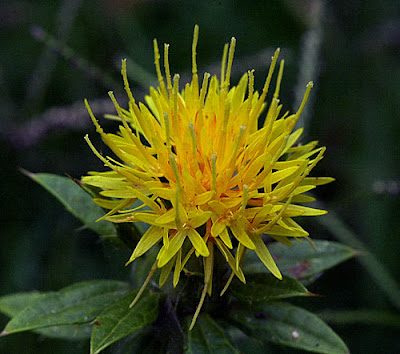
Safflower Oil rocks!


Safflower oil is a type of vegetable oil that is becoming increasingly popular among people who are very conscious about their health. It is a form of oil that is taken out from the seeds of the safflower plant.

Safflower oil can be used as cooking oil, a salad dressing and much more Fair Trade Lebanon promotes and sells safflower oil produced in Deir Ahmar and extracted in a mechanical process (thus, using a natural expeller), which helps in retaining all the naturally found ingredients in safflower oil.

Essential ingredients present in safflower oil:

  • Highest source of polyunsaturated fats found in any other type of vegetable oil, i.e. almost 79% polyunsaturated fatty acids (linoleic acid)
  • 13 % of monounsaturated fatty acids (oleic acid)
  • Only 8% of saturated fatty acids.
  • Omega-6 fatty acids, cis-linoleic acid, vitamin E.

Safflower Oil Benefits:

Body:
  • Polyunsaturated fat helps in strengthening the cell membranes
  • Eliminates the excess fat accumulated in the body
  • Helps in the reduction of the level of cholesterol in the blood which reduces the risk of heart diseases
  • Recommended to obese people suffering from diabetes
  • Helps in regularizing menstrual cycles.

Hair:
  • Promotes hair growth: A regular safflower oil massage is great for healthy looking hair
  • Odourless oil, mild, with a very light texture, absorbs easily into the scalp
  • People with excess hair fall can find effective hair re-growth with the application of safflower oil on the hair.

Skin:
  • Helps in moisturizing the skin, especially during winter.
  • Recommended for acne treatment. Also helps in getting rid of other skin problems like scars, wrinkles, etc.

Safflower


In France and Europe, Artisanat SEL website, order it here.
In Lebanon, available on call at: 05- 952 153


Tuesday, December 15, 2009

Infusions and more...

In Lebanon we have a large variety of wild flowers and roses, all known for their treatment virtues.

In 2007, we decided to launch with a partner cooperative in the South of Lebanon, a selection of finely chosen herbal infusions to send on the market. Consumers in the West liked the concept of boiling the dried leaves and flowers, draining them and then serving the mixture.


However, we noticed that the demand is still higher for the traditional instant tea technique, and decided to raise funds in order to equip the cooperative with a tea bagging machine and proceed with the herbal activity.


By bagging the dried flowers, we will launch herbal boxes for people to buy and discover several flavors at once: Wild Mint, Violet, Sage, Hyssop, Ash, Oregano flower